- Open 24/7, Monday to Sunday
- 4177 + containers delivered
- Serving Rock Island County
Common local projects
Coal Valley dumpsters fit the work on your property
The right container depends on the material, not just the room being cleared. These six options cover frequent Coal Valley projects and the access conditions that affect loading.
Home Cleanout Dumpsters
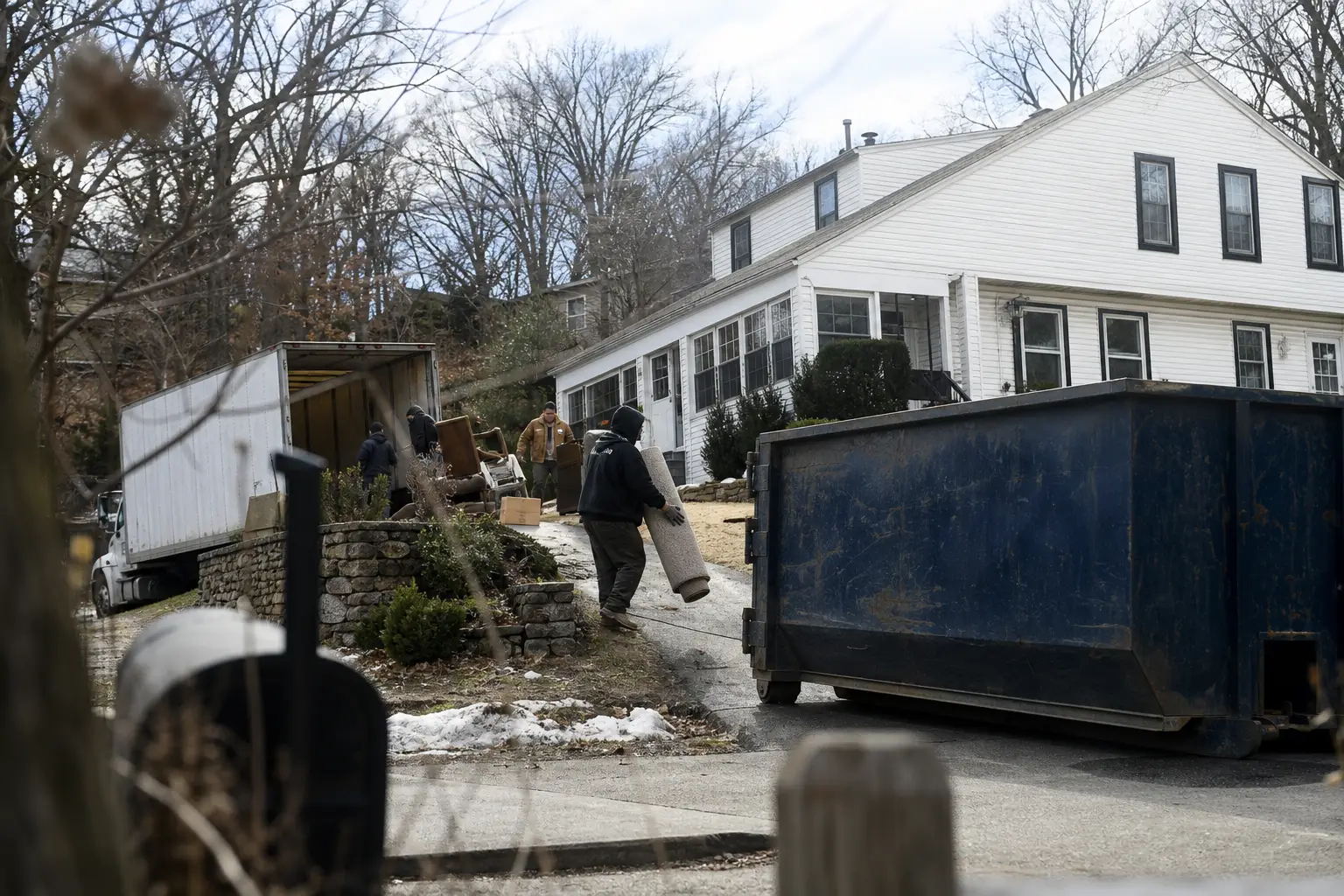
For Coal Valley homes with garages, basements, or inherited contents, choose capacity after separating bulky furniture from dense materials and checking the longer driveway approach.
Household debrisRemodeling Debris Dumpsters
Kitchen, bath, and room updates in Coal Valley often combine cabinets, flooring, drywall, and packaging. Keep the container close enough for short carries without blocking the garage.
Renovation workRoofing Dumpsters
Roof replacement in Coal Valley produces dense shingles that add weight quickly. Place the container on a firm, accessible surface where roof crews can load safely from the driveway.
Roofing materialsMoving and Estate Cleanouts
A Coal Valley move or estate cleanout may involve furniture, boxed belongings, and household fixtures. Confirm door access, driveway length, and the sequence for loading before delivery.
Property transitionsYard Waste Dumpsters
Seasonal trimming around Coal Valley homes can produce branches, brush, and storm debris. Describe the material first, especially if wet loads or unusually large limbs are involved.
Outdoor cleanupConcrete and Heavy Debris Dumpsters
Concrete, masonry, soil, and other dense debris require careful capacity choices for Coal Valley projects. Separate heavy material from mixed waste and explain the load before placement.
Heavy materials
Local placement details
Coal Valley driveways need a placement plan
Coal Valley has the kind of suburban terrain that can change a routine delivery. Some homes sit above the road on sloped lots, while longer driveways create extra distance between the street and the usable work area. A container needs firm ground, enough overhead clearance, and a straight approach that gives the truck room to set it down without scraping pavement or landscaping. Before scheduling, describe the driveway grade, width, surface, and any parked vehicles. Amelie Dumpster Rental confirms the proposed location with a photo before delivery, so the driver is not discovering the access problem at the curb.
Older homes and established neighborhoods in Coal Valley may have narrower driveways, mature trees, detached garages, and utility lines close to the approach. Newer suburban properties can offer more room, but their slopes and finished landscaping still deserve care. A container placed too far uphill can complicate loading, while one set too close to a garage can block doors or create a safety issue. Keep the loading side reachable and identify gates, retaining walls, low branches, and soft ground before the delivery is scheduled.
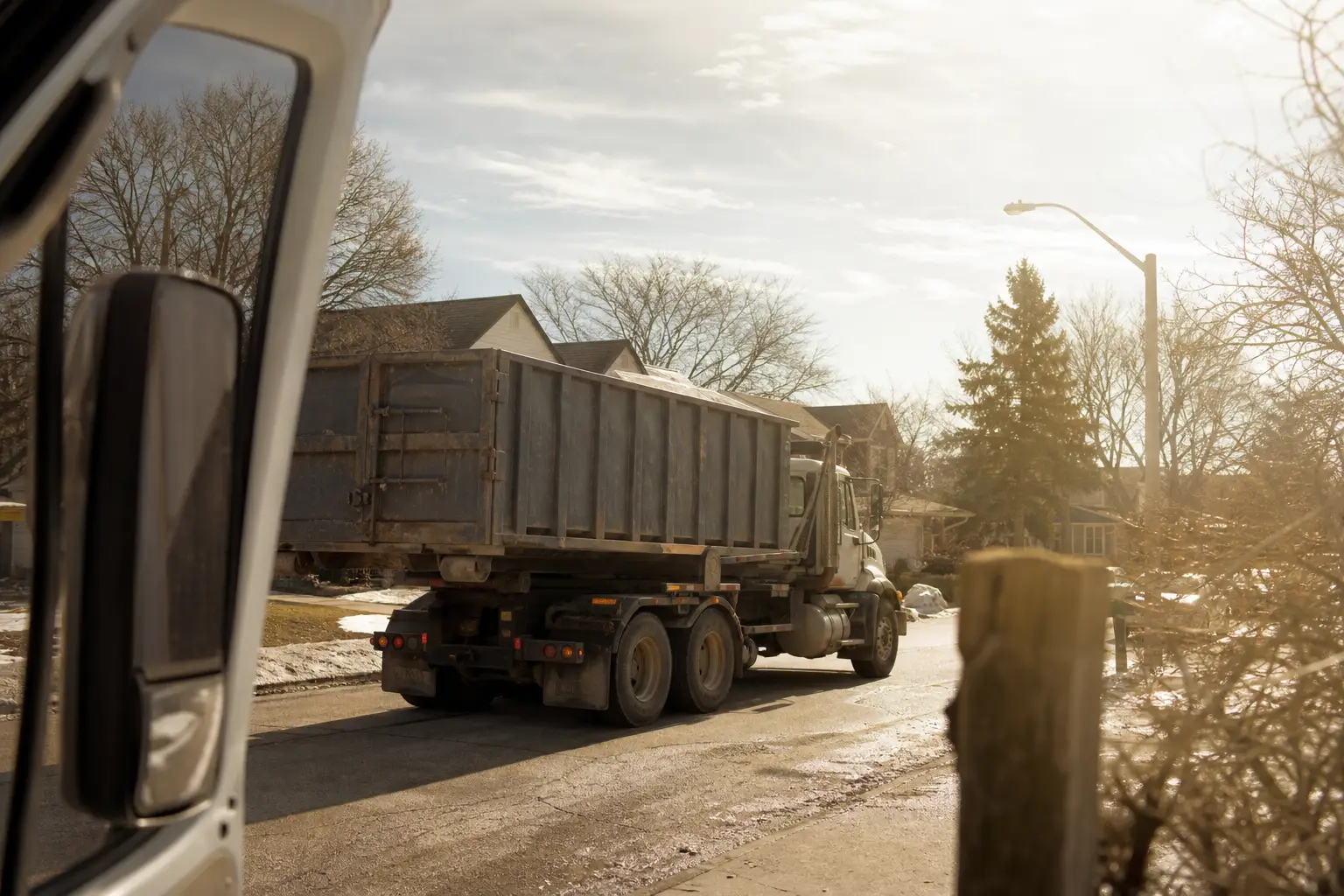
Weather also matters on Coal Valley lots. Wet spring ground can soften beside a driveway, and freeze and thaw cycles can expose uneven areas that looked solid during a dry spell. Summer storms may leave branches or pooled water across the planned approach. Tell the crew if the container must sit on asphalt, concrete, gravel, or another surface, and mention any concern about a slope. Trucks come from Rock Island, and the delivery discussion should account for the actual street approach rather than relying on a generic map view.
Before delivery
Prepare your Coal Valley driveway for the truck
- Measure the Coal Valley driveway width and identify the straightest approach for container placement.
- Move vehicles, trailers, and stored materials away from the planned Coal Valley loading area.
- Mark low branches, utility lines, retaining walls, and soft ground along the driveway approach.
- Separate concrete, soil, masonry, and other heavy debris from ordinary household or remodeling materials.
- Keep garage doors, gates, and walkways usable while loading the dumpster on your Coal Valley property.
Material and capacity
Coal Valley homes change the size decision
Housing age and renovation style affect what enters the container. Older Coal Valley properties may produce plaster, lath, heavier trim, masonry, and layers of flooring during a remodel. A garage cleanout can add appliances, shelving, and dense boxed contents to lighter household debris. Newer homes often generate drywall, cabinets, carpet, and packaging, but a large kitchen or basement project can still fill a container faster than expected. Think about the material first, then the volume. A half-full container of concrete is a different planning problem from a full container of clean cardboard and light fixtures.
Driveway geometry matters just as much as the debris list. On a sloped Coal Valley lot, the best loading point may not be the closest point to the house. A longer approach can require the container to sit nearer the street, where access and visibility are better, while a narrow side drive may limit the usable size. Heavy materials should be loaded evenly rather than piled at one end. Explain the project stage, the heaviest material, and the surface where the container will sit before choosing capacity.
Local questions
Questions about dumpster rental in Coal Valley
How do I prepare a Coal Valley driveway for dumpster delivery?
Clear vehicles, trailers, branches, and stored materials from the planned Coal Valley placement area. Check the driveway width, slope, surface, overhead clearance, and turning approach before delivery. Longer suburban driveways may require a lower street-side position instead of the closest point to the house. Send a clear placement photo and describe gates, retaining walls, and soft ground before scheduling.
What dumpster size works for a Coal Valley home cleanout?
The right size depends on both volume and material weight. A small bathroom or garage project may fit a 10 Yard container, while a larger cleanout or remodeling job may need a 15 Yard or 20 Yard option. Coal Valley homes with basements, detached garages, and longer carries can load differently, so list bulky items and dense debris before choosing.
Can a dumpster sit on a sloped driveway in Coal Valley?
A sloped Coal Valley driveway may work only when the truck has a safe approach and the placement surface is firm enough for the container. Grade, drainage, pavement condition, overhead clearance, and loading access all matter. Do not assume the steepest or closest section is suitable. Provide a driveway photo, note the slope, and identify any retaining wall or soft shoulder.
How are roofing dumpsters placed at Coal Valley homes?
Roofing dumpsters should sit on a firm surface with a practical path from the roof work area, while leaving safe access around the house. Shingles are dense and can become heavy before the container appears full. Coal Valley homes with long or sloped driveways may need a street-side position. Describe the roof access, driveway grade, surface, and estimated material before delivery.
What can I put in a dumpster for a Coal Valley remodeling project?
Typical remodeling debris includes cabinets, drywall, flooring, trim, fixtures, and construction packaging, but accepted materials and load limits depend on the specific project. Concrete, soil, masonry, and other dense debris need separate discussion because weight changes the container decision. For a Coal Valley renovation, list every major material, keep the load level, and ask about anything uncertain before placing it inside.
Plan the Coal Valley placement before the debris arrives
Tell Amelie Dumpster Rental what you are removing, where the container should sit, and what the driveway looks like. Have the placement photo, material list, and any access concerns ready for the scheduling conversation.
Click Here to Call(309) 903-0907Local delivery area
Dumpster delivery follows Coal Valley access routes
Amelie Dumpster Rental handles dumpster placement throughout Coal Valley, using the actual driveway, lot, and project conditions to plan delivery. Tell us whether the property sits on a hill, has a long approach, or shares a tight residential access lane. The truck route from Rock Island is only part of the plan; the final feet on your property determine where the container can safely sit.